Rubbish collection Kentish Town Road NW5 tips
Posted on 29/04/2026
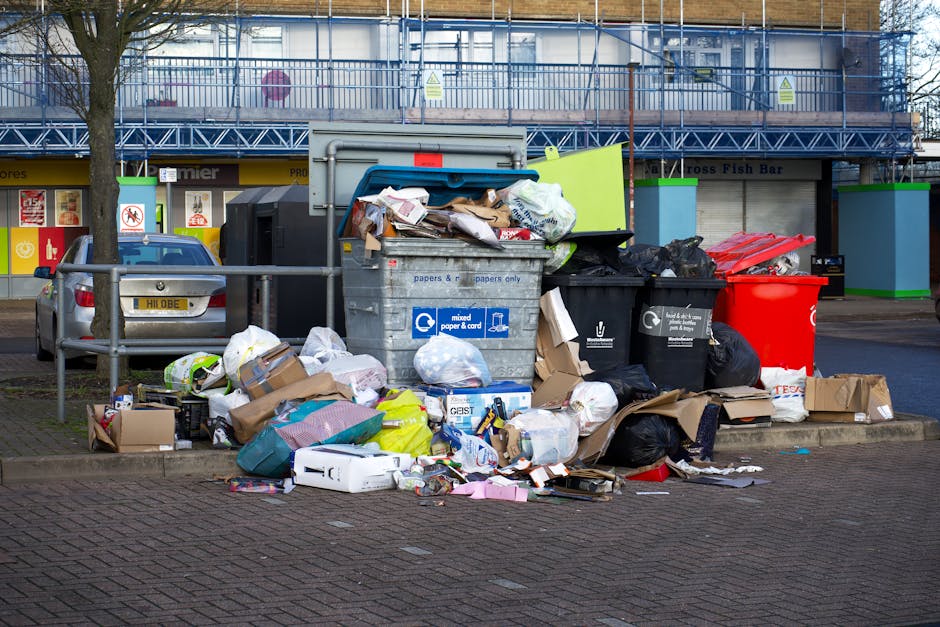
Rubbish collection Kentish Town Road NW5 tips: a practical local guide
If you are dealing with a stubborn pile of bags, a flat that needs clearing, or a box of odd bits that has outstayed its welcome, you are not alone. Rubbish collection on Kentish Town Road in NW5 can be simple enough once you know what to expect, but it can also turn awkward fast if access is tight, items are mixed up, or you leave everything until the last minute. The good news? A few sensible steps make a real difference.
This guide to Rubbish collection Kentish Town Road NW5 tips is designed to help you plan better, avoid common mistakes, and choose the right approach for your household, business, or building project. Whether you need a one-off uplift or a more regular arrangement, the aim is the same: keep things safe, lawful, efficient, and as low-stress as possible. To be fair, that is what most people want with waste. Just gone, without the hassle.
Why Rubbish collection Kentish Town Road NW5 tips Matters
Kentish Town Road is busy, lived-in, and always moving. Flats sit above shops, deliveries come and go, and pavements can feel crowded even on a quiet day. That matters because waste is not just a back-of-house problem; it affects kerbside access, neighbour relationships, building safety, and how tidy a property feels from the street. A bag left in the wrong place can become a nuisance quickly, especially if it blocks a doorway or attracts birds before collection.
Good rubbish collection habits help you stay ahead of that pressure. They also reduce the odds of missed collections, overloaded bins, and last-minute panic when you realise the bag you thought was "general waste" is actually a mixture of cardboard, small electricals, and a half-broken chair. That mixture is more common than people admit, especially after a clear-out.
There is also a practical money angle. If waste is sorted badly, stored poorly, or booked in too late, the job often becomes more expensive and less efficient. A little planning up front tends to pay back very quickly. For local property owners and landlords, that can be particularly useful; if you are also thinking about occupancy, turnover, or improvement works, our guide to living in Kentish Town gives a broader sense of local day-to-day realities.
How Rubbish collection Kentish Town Road NW5 tips Works
In practical terms, rubbish collection usually starts with one simple question: what exactly needs removing? Once you know that, the rest becomes easier. Household rubbish, bulky waste, old furniture, garden cuttings, builders' debris, and office clear-out material all behave differently. Some can be recycled; some need specialist handling; some are awkward because of weight, size, or contents.
A standard collection flow often looks like this:
- You identify the waste type and approximate volume.
- You separate items that can be reused, recycled, or disposed of differently.
- You check access: stairs, basement steps, loading space, permit restrictions, lifts, or narrow entrances.
- You arrange collection for a sensible time window, ideally when access is easiest.
- The waste is loaded safely, sorted where appropriate, and taken for treatment or disposal.
That sounds straightforward, and often it is. But the tricky bits are usually local. Kentish Town Road has mixed property types, so one address might have rear access and another might mean carrying items through a hallway, down two flights of stairs, and round a parked van. That is where a bit of planning really helps. If the job is part of a broader clear-out, you may also find our services overview useful for understanding the different collection options available.
One thing people underestimate is how much better a collection goes when the waste is staged neatly. A stack by the front room wall is easier to handle than a scatter of half-empty bags hiding under a table, a radiator, and a bit of packaging from the last flat-pack miracle that was not quite a miracle.
Key Benefits and Practical Advantages
Done well, local rubbish collection gives you more than a clear floor. It improves how a property feels, makes cleaning easier, and reduces stress for everyone involved. That applies whether you are a homeowner, tenant, landlord, facilities manager, or a business owner trying to keep an office tidy without turning the place upside down.
- Faster clear-up: waste is removed in one go rather than spread across several frustrating trips.
- Safer spaces: fewer trip hazards, sharp edges, or heavy items left in walkways.
- Better recycling: separate materials are more likely to be diverted from landfill where possible.
- Less neighbour friction: controlled placement and timely collection reduce visual clutter and complaints.
- Cleaner property presentation: especially important for rentals, sales, and commercial premises.
There is also a quiet advantage that people notice only afterwards: mental space. A clear room feels lighter. You hear the echo differently. The place stops nagging at you from the corner of your eye. Sounds a bit dramatic, perhaps, but anyone who has lived with a pile of unwanted furniture knows the feeling.
If your project involves furniture as well as mixed rubbish, take a look at our dedicated furniture disposal service in Kentish Town. For larger property jobs, the right approach often saves more time than people expect.
Who This Is For and When It Makes Sense
This type of local rubbish collection is useful for a wide range of people. If you are wondering whether your situation is "big enough" to justify professional help, the answer is often yes once the waste becomes awkward, bulky, or time-sensitive.
It makes particular sense for:
- Tenants moving out and leaving behind mixed bagged waste or bulky items
- Homeowners having a clear-out after a refurbishment or renovation
- Landlords preparing a property between lets
- Shop owners and office managers dealing with packaging, old stock, or furniture
- People clearing gardens, sheds, lofts, basements, or garages
- Builders and tradespeople needing a tidy site with regular debris removal
If the waste is small and can be put out in standard bins, that is one thing. But if you are dealing with a sofa, broken cabinets, renovation offcuts, or several bin bags that do not fit normal collection patterns, it is usually worth organising a proper uplift. For construction-related jobs, our page on builders' waste disposal in Kentish Town explains that side of things more clearly.
And if you are tackling a whole property, not just a corner of it, a house clearance in Kentish Town may be the better fit. Office spaces, naturally, lean the other way; in that case, office clearance services can be far more efficient than piecemeal removal.
Step-by-Step Guidance
If you want the smoothest possible collection, follow a simple sequence. It does not need to be fancy. In fact, the best setups are usually the least dramatic ones.
1. Identify what you need removed
Start by grouping items into broad categories: general rubbish, recycling, bulky furniture, electricals, garden waste, and builders' debris. Do not guess too loosely. A mixed pile often looks smaller before it is sorted, then somehow grows legs and becomes two piles.
2. Check for anything that needs special handling
Batteries, paints, chemicals, gas bottles, fluorescent tubes, and some electricals should not be treated like ordinary rubbish. If you are unsure, put them aside until you have checked the collection terms or sought specialist guidance. A quick pause is better than making a disposal mess of it.
3. Measure volume in a rough but useful way
You do not need a tape measure and a calculator from the 1990s. Just estimate how much space the waste takes up: a few bags, a van half-load, a full van load, or a larger clearance. That helps set realistic expectations and reduces back-and-forth later.
4. Make access easy
Move cars if needed, unlock gates, clear hallway obstacles, and let neighbours or building managers know if a lift or shared entrance will be used. On a road like Kentish Town Road, access often matters more than the waste itself. One blocked entrance can turn a quick job into a frustrating one.
5. Sort items before collection day
Put similar items together. Flatten cardboard. Tie loose bag handles. Keep breakable or sharp items separate. It looks tidier, but more importantly it makes the load safer to move.
6. Ask about recycling and disposal routes
A responsible service should be able to explain, in plain English, what happens to the waste after it is collected. If the answer is vague or evasive, that is usually a sign to ask more questions.
7. Confirm timing and loading arrangements
Be clear about when the collection will happen and whether the waste needs to be placed outside or can be removed from inside the property. That tiny detail avoids a surprising amount of confusion.
Expert Tips for Better Results
A few small habits make rubbish collection feel far more manageable. None of this is complicated, but the effect is noticeable.
- Label mixed piles early. A quick note like "electrical," "recycle," or "skip item" keeps everyone aligned.
- Keep heavier items on top or at the edge. That helps with lifting and stops fragile waste getting crushed.
- Use sturdy bags, not supermarket leftovers. Thin bags split at exactly the wrong moment. Usually on stairs. Naturally.
- Book with the property layout in mind. Basement flat, top-floor walk-up, shared access, and rear loading all change the plan.
- Plan around busy times. Early mornings and school-run hours can be more awkward on a road like Kentish Town Road.
- Keep documentation if you are responsible for the waste. In commercial settings, records can be useful if questions come up later.
A useful local observation: many collection delays are not about the rubbish itself, but about the last ten metres to the front door. It sounds small, yet it is often the difference between a calm collection and a slightly chaotic one.
If sustainability matters to you, it is worth reading more about our recycling and sustainability approach. Not every item can be reused or recycled, but good sorting improves the odds.

Common Mistakes to Avoid
Most waste problems come from a handful of predictable missteps. The good news is that they are easy to avoid once you know what to look for.
- Leaving sorting until collection day: this usually creates delays and confusion.
- Mixing prohibited items with general waste: some materials need separate handling.
- Underestimating volume: what looks like "just a few bags" can turn into a much bigger load.
- Blocking access routes: hallways, fire exits, and shared entrances should stay clear.
- Not checking building rules: flats, estates, and managed properties may have specific collection conditions.
- Forgetting bulky items: people often remember the bags and forget the old mattress in the back room. It happens more than you think.
Another mistake is assuming every collection is basically the same. Household rubbish, garden waste, office furniture, and builders' debris all need different handling. If you are dealing with a specific category, use a specific service. That is usually the cleaner, cheaper, less annoying route.
Tools, Resources and Recommendations
You do not need much to prepare well, but a few basic tools and checks can make the process smoother.
| Item or resource | Why it helps | Best for |
|---|---|---|
| Strong refuse bags | Reduce splitting and make handling safer | General waste, light clear-outs |
| Marker labels | Helps separate recyclables, bulky items, and special waste | Mixed household or office jobs |
| Measuring tape or quick room estimate | Improves volume estimates and quote accuracy | Any collection with multiple items |
| Lift or access instructions | Prevents delays on the day | Flats, managed buildings, basement properties |
| Provider service pages | Clarify what is included and what is not | Anyone comparing options |
For most readers, the most useful resources are simple: the service description, the pricing information, and the safety or insurance pages. If you want to compare broader service choices, our pricing and quotes page is a sensible starting point, followed by the insurance and safety information.
And if you want to know more about the company itself before booking, the about us page can help with that. Trust matters when somebody is removing waste from your home or premises. It really does.
Law, Compliance, Standards, or Best Practice
Waste disposal in the UK should be handled carefully and in line with relevant legal and environmental expectations. While this article is not legal advice, the broad best practice is straightforward: use reputable carriers, separate hazardous or specialist waste, and avoid fly-tipping or careless dumping. If you are responsible for the waste, that responsibility does not disappear just because the bags leave your sight.
For households, the practical point is to avoid placing unsuitable items in normal collections and to make sure any third-party removal is done properly. For businesses, the bar is usually higher because records, duty of care, and safe handling become more important. That does not mean it has to be complicated. It just means the paperwork and chain of responsibility need a bit more attention.
A few common best-practice principles are worth keeping in mind:
- Choose a collection provider that explains how waste is handled.
- Keep hazardous materials separate until you have clear instructions.
- Do not leave waste where it could obstruct emergency access.
- Use sensible packaging for sharp, heavy, or fragile items.
- Ask for clarity if you are uncertain about any item.
For anyone buying, renting, or investing locally, waste clearance can even affect how a property is presented and maintained. If that is part of your thinking, you may also find our guides on acquiring property in Kentish Town and property investment strategies in Kentish Town useful background reading.
Options, Methods, or Comparison Table
Choosing the right rubbish collection method depends on the size of the job, the type of waste, and how quickly you need it gone. Here is a practical comparison.
| Method | Best for | Pros | Limitations |
|---|---|---|---|
| Regular bin collection | Small household waste streams | Convenient, routine, no special booking | Not suitable for bulky or excess waste |
| One-off rubbish collection | Clear-outs, bulky items, mixed household waste | Flexible, fast, ideal for sudden jobs | Needs planning around access and waste type |
| House clearance | Whole-property or partial-property clearances | Efficient for large volumes | May be more than you need for small loads |
| Office clearance | Desks, chairs, files, packaging, old equipment | Structured for commercial premises | Often requires careful scheduling |
| Builders' waste removal | DIY and renovation debris | Handles heavy, awkward materials | May involve stricter waste separation |
If the job is outdoors rather than inside, garden waste removal in Kentish Town is worth considering. Leaves, branches, soil, and hedge cuttings need a different approach from a kitchen clear-out, and it is usually better to keep those streams separate.

Case Study or Real-World Example
Picture a typical flat on or near Kentish Town Road. The resident has just finished a long weekend clear-out: three bags of general waste, two boxes of old paperwork, a broken bedside cabinet, and a chair that was "only slightly wobbling" for the last year. Nothing dramatic. Just enough to clutter a room and keep getting in the way.
At first glance, it looks like a quick job. But then the realities show up: a narrow staircase, no lift, shared hallway access, and a couple of items that cannot simply be tossed in with normal rubbish. If the bags are not sorted, the paperwork may need separating, the cabinet may need careful handling, and the chair could take up more space than expected. Suddenly the job is not really about waste. It is about organisation.
The difference comes from preparation. The resident groups items by type, places the fragile paperwork in a box, keeps the walkway clear, and checks the collection timing so nobody is trapped waiting around with bags by the door. The result is a much calmer uplift. Less lifting, fewer questions, no awkward hallway shuffle. Nice and easy, which is how it should be.
That same pattern applies to shops, offices, and rental properties. The smaller the space, the more important the preparation becomes. It is rarely the amount of waste that causes trouble. It is the way it is presented.
Practical Checklist
Use this before your collection day. It is a simple list, but it catches most of the usual problems.
- Identify what needs removing and separate different waste types.
- Check for batteries, chemicals, paint, sharps, and electricals.
- Estimate volume roughly so you can choose the right service.
- Clear access routes, entrances, and shared hallways.
- Move vehicles if loading space is needed.
- Flatten cardboard and secure loose items.
- Keep heavy items manageable and avoid overfilled bags.
- Confirm the collection time and whether waste should be outside or inside.
- Review pricing, payment, and safety details before booking.
- Ask about recycling and disposal methods if sustainability matters to you.
For readers comparing service quality and checkout confidence, the payment and security information may also be useful, especially if you prefer to know how arrangements work before you commit.
Conclusion
Good rubbish collection on Kentish Town Road in NW5 is not really about bin bags at all. It is about making life easier: clearer rooms, safer access, fewer surprises, and a process that respects the space you live or work in. Once you know how to sort, stage, and schedule waste properly, everything tends to feel simpler.
The main lesson is straightforward. Think ahead a little, keep waste types separate where possible, and choose a collection method that fits the job rather than forcing the job to fit the method. That small change saves time, money, and a lot of annoyance. And let's face it, no one needs more of that on a busy London road.
Get a free quote today and see how much you can save.
Whether you are clearing a single room or dealing with a bigger mess than you expected, a well-planned collection can make the whole place feel lighter. That's a good feeling, even on a grey NW5 morning.
 Tipper Van - Waste Removal and Waste Collection Prices in Kentish Town
 Luton Van - Waste Removal and Waste Collection Prices in Kentish Town


